
AI-Powered Game Design
AI-powered game design has become one of the most revolutionary trends in the gaming industry. The gaming world has always pushed the boundaries of technology, striving to create immersive worlds and lifelike interactions. From pixelated sprites to vast open worlds, the evolution of video games is fueled by technological breakthroughs — and today, nothing is shaping that evolution more than AI-powered gaming.
In recent years, AI-powered game design has redefined how games are created, experienced, and evolved. This new wave of AI game design allows developers to build smarter worlds, where virtual environments react, adapt, and grow with player behavior. One of the most profound applications lies in AI game development for Non-Playable Characters (NPCs) — the in-game entities that populate digital worlds.
Traditionally, NPCs followed rigid scripts and predictable patterns. Now, with AI-powered game design, they have become dynamic, adaptive, and capable of learning from each interaction. These AI-driven characters make every encounter unique, giving players richer and more immersive experiences than ever before.
This article explores the history, innovations, and future of AI-powered game design and NPC development, showing how artificial intelligence is reshaping the future of interactive entertainment and transforming the entire industry.
The Evolution of NPCs in Games Through AI-Powered Game Design
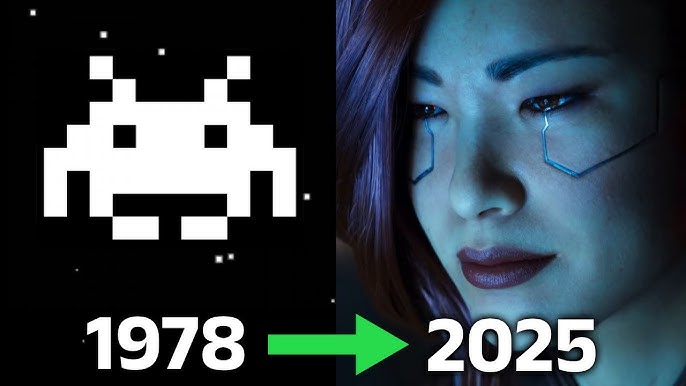
Early NPCs: Static and Predictable
In classic games like The Legend of Zelda or Super Mario Bros., NPCs served limited functions. They delivered dialogue, sold items, or acted as background filler. Their behaviors were fixed, creating predictable interactions.
The Rise of Scripting in Game Development
With the growth of RPGs in the 1990s and 2000s, NPCs gained complexity through scripted behaviors. Games like Skyrim or Mass Effect offered branching dialogue trees, making NPCs feel more interactive. Still, they were confined by pre-written scripts.
AI-Driven NPCs in Modern AI-Powered Game Design
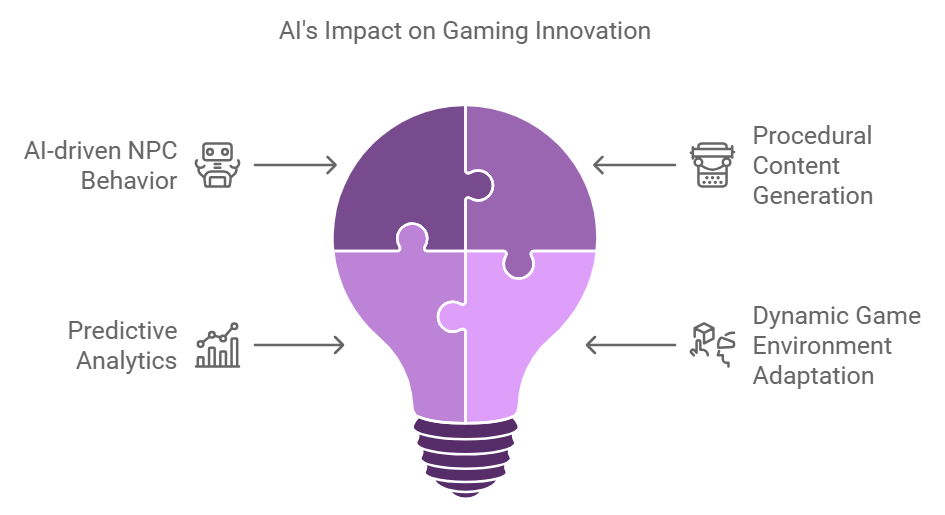
Modern advancements in artificial intelligence in gaming are breaking these boundaries. NPCs now adapt to player behavior, learn from interactions, and simulate human-like decision-making. This shift is transforming NPCs from passive background characters into active participants in storytelling and gameplay.
Procedural Content Generation in AI-Powered Game Design
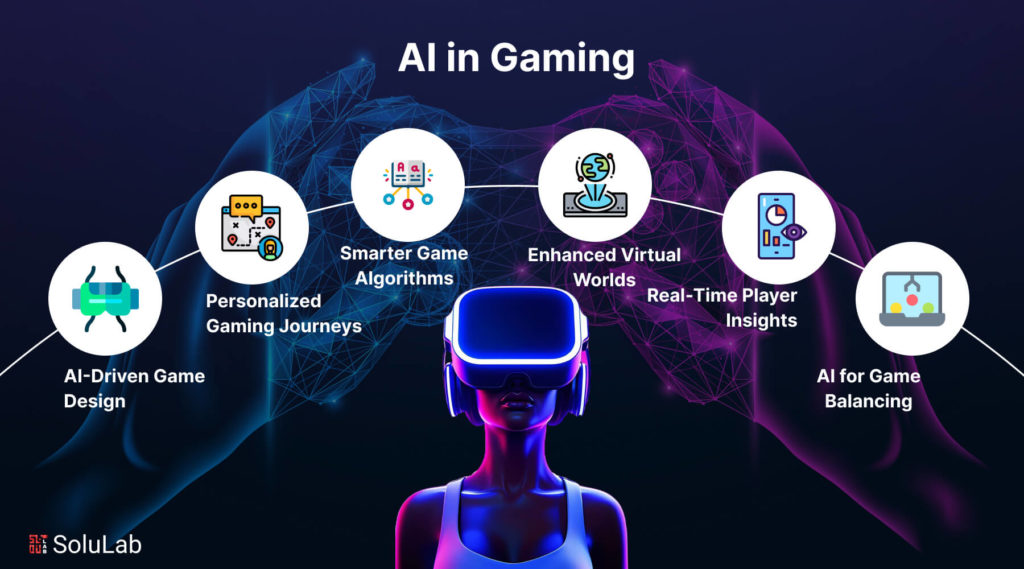
Procedural Content Generation
AI is increasingly used to design levels, environments, and quests dynamically. Games like No Man’s Sky rely on procedural generation to create billions of unique planets and ecosystems, driven by AI algorithms.
Adaptive Difficulty Using AI Game Design Techniques
AI tracks player behavior and adjusts game difficulty in real-time. For example, Resident Evil 4 subtly adapts enemy aggression and resources based on player performance, ensuring a balanced experience.
Personalized Gameplay with AI-Powered Game Design
AI systems analyze a player’s style and tailor quests, items, or storylines accordingly. This personalization makes every playthrough unique and enhances immersion.
Automated Testing and Optimization in AI Game Design
AI bots are now used in game development to stress-test environments, uncover bugs, and analyze balancing issues faster than human testers.
AI NPCs: From Scripted to Smart Characters
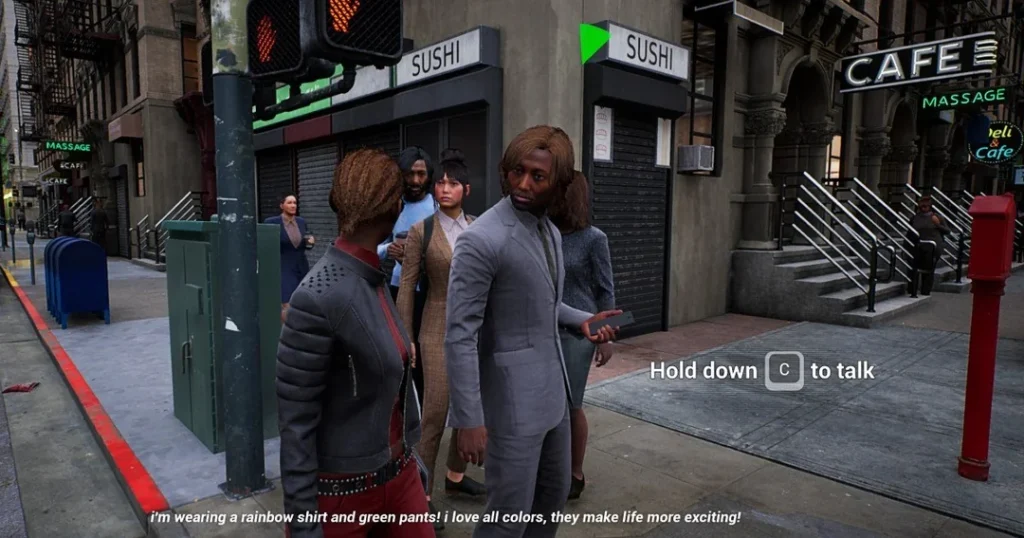
Overcoming Traditional NPC Limitations with AI-Powered Game Design
- Repetitive dialogue.
- Linear quest systems.
- Predictable combat mechanics.
Next-Generation AI NPCs
AI NPCs are designed to:
- Learn from player interactions.
- Show emotions and personality traits.
- Make decisions based on environmental context.
- Engage in natural conversations using Natural Language Processing (NLP).
Technologies Driving AI NPCs in AI-Powered Game Design
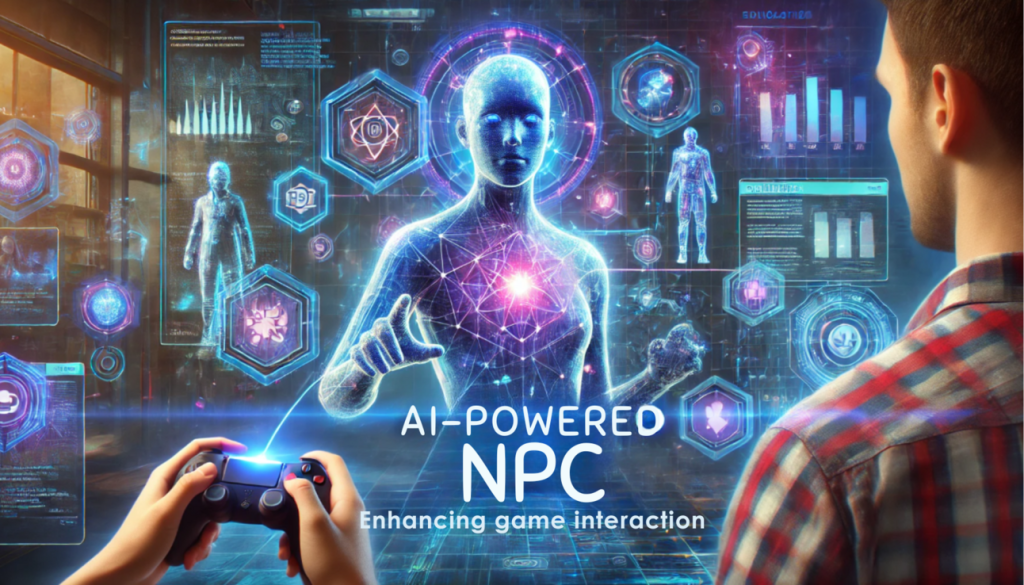
1. Machine Learning (ML)
NPCs trained with ML models can adapt their combat tactics or social behaviors based on repeated encounters.
2. Natural Language Processing (NLP)
AI NPCs can understand and respond to human language in more natural, unscripted ways. Titles like AI Dungeondemonstrate how NLP creates fluid conversations.
3. Neural Networks
Neural networks allow NPCs to predict player choices and respond dynamically, creating more believable interactions.
4. Behavioral AI Systems
Systems like GOAP (Goal-Oriented Action Planning) enable NPCs to pursue objectives logically, reacting to in-game changes like humans would.
Examples of AI NPCs in Modern Games
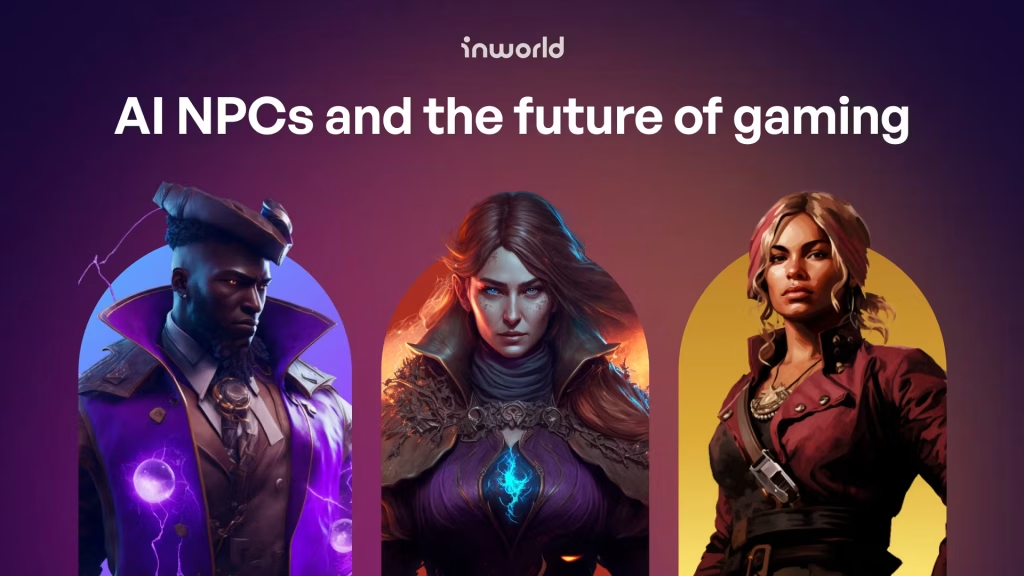
- Shadow of Mordor (Nemesis System)
Enemies remember player actions and evolve accordingly, creating personal rivalries. - Cyberpunk 2077 (Crowd AI)
Though controversial at launch, the game attempted to simulate a living city with dynamic NPCs. - Red Dead Redemption 2
NPCs react differently based on player behavior—greeting, avoiding, or confronting depending on your reputation. - The Sims Series
Each NPC has unique AI-driven routines and evolving personalities.
Benefits of AI-Powered NPCs
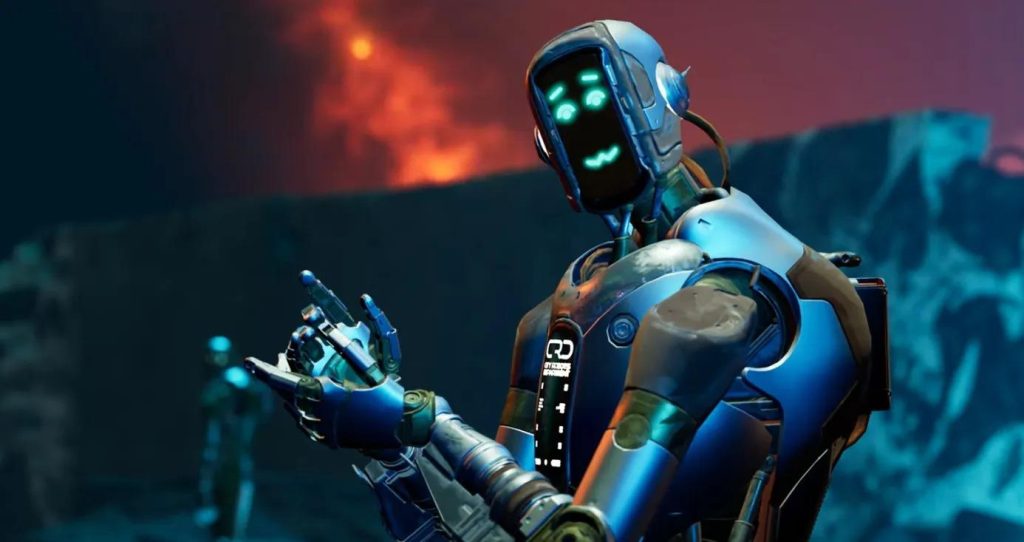
- Immersion: Realistic NPCs make game worlds feel alive.
- Replayability: Dynamic interactions ensure unique playthroughs.
- Storytelling: NPCs can create emergent narratives not scripted by developers.
- Challenge: Smarter opponents create engaging gameplay.
Challenges in AI NPC Development and AI-Powered Game Design
Computational Costs
Advanced AI NPCs require significant processing power, which can strain hardware.
Balance Between Realism and Fun
Overly realistic NPCs may behave unpredictably, breaking gameplay flow.
Ethical Considerations
If NPCs become too lifelike, questions arise about emotional manipulation and the nature of virtual suffering.
Development Time and Resources
Creating advanced AI systems is expensive and time-consuming.
AI in Storytelling and Worldbuilding

AI doesn’t just improve gameplay—it also enhances narrative.
- Dynamic Storytelling: AI-driven narratives adapt based on player actions.
- Emergent Gameplay: Unique, unscripted moments arise naturally from AI behavior.
- Living Worlds: NPCs pursue goals independently, giving the illusion of a real ecosystem.
The Future of AI-Powered Game Design
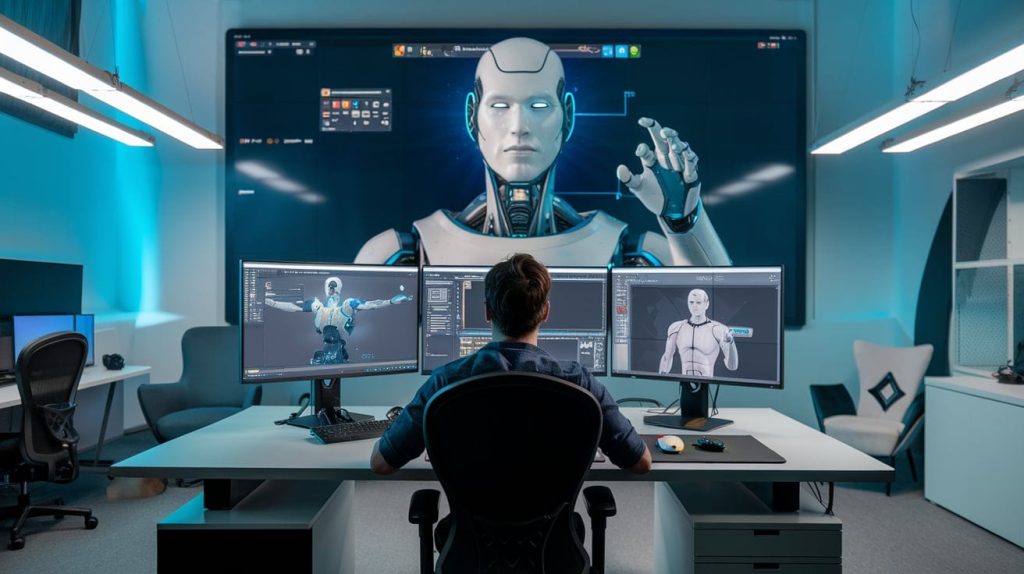
Fully Conversational NPCs
Future NPCs may engage in free-flowing dialogue indistinguishable from human players, powered by advanced NLP.
Emotionally Intelligent NPCs
NPCs will recognize player tone, choices, and history to respond with empathy or hostility.
AI as a Co-Creator
Instead of replacing developers, AI will act as a creative partner—generating quests, characters, and environments based on designer input.
Virtual Companions
Games may feature AI-driven companions who grow with players, forming long-term bonds across multiple titles.
AI Beyond NPCs: Industry Impact
- Indie Development: AI tools democratize game design, allowing smaller studios to create large-scale projects.
- Cloud Gaming Integration: AI NPCs combined with cloud computing will enable massive, persistent online worlds.
- Esports and Competitive Gaming: Smarter AI opponents offer training for professional players.
Conclusion
AI-powered game design is one of the most transformative innovations in the gaming industry. By revolutionizing how NPCs behave, interact, and evolve, AI is turning static game worlds into living, breathing universes.
From smart NPCs that adapt to player choices to AI-driven procedural generation that creates infinite possibilities, artificial intelligence is not just a tool—it’s a co-creator in the future of game development.
As technology advances, the line between scripted characters and dynamic, intelligent entities will blur. The future of game design will feature NPCs that feel less like pre-programmed actors and more like genuine personalities—making every game experience unique, immersive, and deeply personal.