
AI-Powered Software: Redefining Development
The software industry is undergoing a fundamental transformation with the rise of AI-powered software. Artificial intelligence is no longer just a research concept; it has become a driving force in software development, enabling automation, intelligent decision-making, and enhanced user experiences. From predictive analytics and natural language processing to autonomous systems and recommendation engines, AI is redefining how software is designed, developed, and deployed.
Modern businesses and developers face unprecedented demand for faster, more intelligent applications. Traditional development methods are struggling to keep up with the complexity of today’s software requirements. AI-powered tools and frameworks are bridging this gap, offering solutions that accelerate development, improve code quality, and enhance the functionality of applications. This article explores the evolution, current innovations, future trends, challenges, and implications of AI-powered software in development.
Understanding AI-Powered Software: How AI-Powered Software is Redefining Development
What is AI-Powered Software and Its Role in Modern Software Development
AI-driven applications refer to software that incorporates artificial intelligence technologies—such as machine learning, natural language processing, computer vision, and predictive analytics—to perform tasks traditionally requiring human intelligence. These intelligent solutions can learn from data, make predictions, automate complex processes, and adapt to changing conditions in real-time.
Unlike traditional software that follows predefined rules, AI-enhanced applications can improve over time, becoming more accurate and efficient as they process more data. Examples include AI-powered chatbots, recommendation systems, fraud detection tools, and intelligent workflow automation platforms.
Key Technologies in AI-Powered Software
- Machine Learning (ML): Enables software to learn from data and improve performance without explicit programming.
- Natural Language Processing (NLP): Allows software to understand, interpret, and respond to human language.
- Computer Vision: Provides the ability to analyze and interpret visual data for applications such as image recognition and autonomous systems.
- Predictive Analytics: Uses historical data to make informed predictions about future outcomes.
Together, these technologies form the backbone of modern AI-powered software, transforming software development from static rule-based programming into dynamic, intelligent systems.
The Evolution of AI in Software Development: Rise of AI-Powered Software
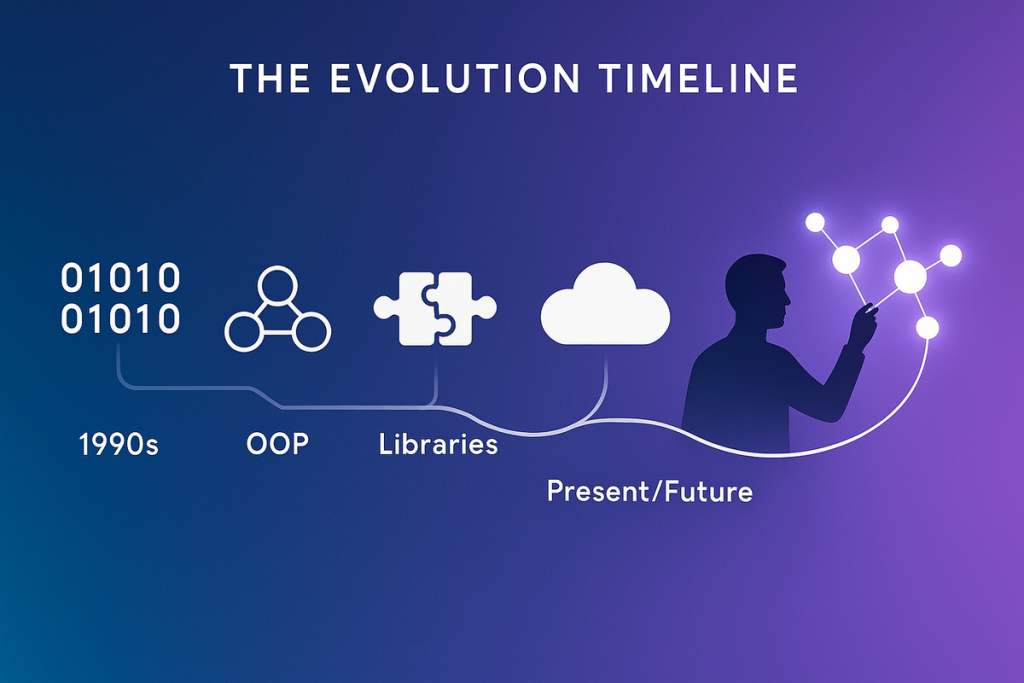
Early Automation and Expert Systems in AI-Powered Software
The integration of AI into software development began with early automation and expert systems. These rule-based systems could perform specific tasks, such as medical diagnosis or financial calculations, based on predefined logic. While revolutionary at the time, they lacked adaptability and were limited to narrow applications.
The Rise of Machine Learning in AI-Powered Software
The emergence of machine learning marked a significant shift. ML algorithms enabled software to learn from data, improving its performance over time. Early applications included predictive modeling, spam detection, and recommendation systems. Machine learning laid the foundation for AI-powered software, allowing developers to build more intelligent, adaptable applications.
Modern AI Frameworks and Tools for AI-Powered Software Development
Today, AI frameworks like TensorFlow, PyTorch, and Microsoft Cognitive Toolkit have democratized AI development. These platforms provide pre-built models, APIs, and libraries that accelerate software development, making it accessible to developers without deep expertise in AI. Modern development environments integrate AI seamlessly, enabling rapid prototyping, testing, and deployment of intelligent applications.
Current Innovations in AI-Powered Software
AI-Assisted Coding and Development
One of the most impactful innovations is AI-assisted coding. Tools like GitHub Copilot, Tabnine, and IntelliCode analyze code patterns, suggest improvements, and even generate entire code snippets. Developers can reduce repetitive tasks, catch bugs early, and accelerate the development cycle.
These AI-driven tools are particularly valuable for large-scale software projects, where maintaining consistency, adherence to coding standards, and rapid iteration are critical.
Predictive Analytics and Decision Support
AI-driven applications can analyze vast datasets to provide predictive insights and support decision-making. Businesses leverage these intelligent tools to forecast trends, optimize operations, detect fraud, and enhance customer experiences. Predictive analytics transforms raw data into actionable intelligence, giving organizations a competitive advantage.
Intelligent Automation and Workflow Optimization
AI-powered workflow automation tools reduce manual intervention in repetitive processes. Robotic Process Automation (RPA) combined with AI enables software to handle complex tasks, such as invoice processing, customer service, and IT operations, with minimal human supervision. This not only improves efficiency but also reduces operational costs and errors.
Personalized User Experiences
AI-driven applications enable highly personalized experiences for end-users. These intelligent solutions can dynamically adapt interfaces, content recommendations, and functionality based on user behavior, preferences, and historical interactions. Personalized AI experiences enhance engagement, satisfaction, and loyalty across industries, including e-commerce, entertainment, and education.
AI in Security and Compliance
Security-focused AI-driven applications can detect anomalies, identify potential threats, and respond to cyberattacks in real-time. By analyzing patterns and learning from past incidents, these intelligent systems proactively protect sensitive data and ensure regulatory compliance. AI-powered security tools are essential in today’s increasingly complex digital environment.
AI-Powered Software in Specific Industries
Healthcare
In healthcare, AI-powered software supports diagnostics, treatment planning, and patient monitoring. Machine learning models analyze medical images, detect diseases, and predict patient outcomes, improving accuracy and reducing human error. AI-driven applications also assist in personalized medicine, ensuring treatments are tailored to individual patient needs.
Finance
The finance industry relies on AI-powered software for fraud detection, risk assessment, algorithmic trading, and customer support. Real-time data analysis enables financial institutions to make informed decisions, prevent fraudulent activities, and enhance client experiences.
Retail and E-Commerce
Retailers use AI-powered software to optimize inventory management, recommend products, and enhance customer engagement. Predictive analytics allows businesses to anticipate demand, adjust pricing strategies, and personalize marketing campaigns effectively.
Manufacturing and Logistics
AI-powered software enhances manufacturing and logistics operations by optimizing supply chains, predicting maintenance needs, and automating quality control. Intelligent systems increase operational efficiency, reduce downtime, and minimize costs.
Software Development Industry
Even the software development industry benefits from AI-driven applications through code analysis, automated testing, and intelligent project management. These tools accelerate release cycles, improve software quality, and streamline collaboration among distributed teams.
Future Trends in AI-Powered Software
Enhanced Natural Language Understanding
Future AI-powered software will exhibit more advanced natural language understanding, enabling seamless interaction between humans and machines. Applications will include virtual assistants capable of complex reasoning, multilingual support, and contextual decision-making.
Autonomous Systems
AI-powered software is paving the way for autonomous systems across industries, including self-driving cars, drones, and robotics. These systems rely on real-time data analysis, predictive modeling, and adaptive learning to operate safely and efficiently without human intervention.
Integration with Edge Computing
Edge AI will allow AI-powered software to run locally on devices, reducing latency and dependency on cloud infrastructure. This is particularly important for IoT devices, autonomous vehicles, and real-time analytics, where immediate processing is critical.
AI-Driven DevOps
The integration of AI into DevOps processes will redefine software deployment and maintenance. Predictive analytics, anomaly detection, and automated remediation will ensure continuous delivery, faster iterations, and higher system reliability.
Explainable AI and Ethical AI
As AI-powered software becomes more pervasive, transparency and ethics are increasingly important. Explainable AI (XAI) ensures that AI decisions are understandable and accountable. Ethical AI frameworks will guide software development, addressing biases, privacy concerns, and fairness.
Challenges and Considerations

Data Privacy and Security
AI-powered software relies heavily on data. Protecting sensitive information while complying with regulations such as GDPR and CCPA is a significant challenge. Secure data handling, anonymization, and encryption are essential for responsible AI deployment.
Bias and Fairness
AI systems can inherit biases from training data, leading to unfair or discriminatory outcomes. Developers must implement strategies for bias detection, mitigation, and continuous monitoring to ensure equitable software behavior.
High Computational Requirements
AI-powered software often requires substantial computational resources for training and inference. Optimizing performance while managing costs is crucial for both enterprise and consumer applications.
Complexity of Integration
Integrating AI into existing software systems can be complex. Compatibility with legacy systems, scalability, and maintainability are key considerations for successful deployment.
Skill Gap
Developing AI-driven applications requires specialized skills in machine learning, data science, and AI frameworks. Organizations must invest in training, collaboration, and knowledge sharing to bridge the talent gap and fully leverage intelligent software solutions.
Conclusion
AI-driven software is transforming the landscape of software development, enabling applications that are intelligent, adaptive, and capable of handling complex tasks autonomously. From healthcare and finance to gaming and enterprise operations, intelligent software solutions are reshaping how programs are designed, deployed, and utilized.
The future of AI-enhanced software promises even greater advancements, including autonomous systems, explainable AI, edge computing, and enhanced natural language understanding. These innovations empower developers to create smarter applications, deliver personalized experiences, and solve challenges that were previously insurmountable.
As organizations adopt intelligent software in their development processes, addressing challenges related to privacy, ethics, bias, and computational requirements will be critical. By leveraging AI-driven applications, businesses and developers can unlock unprecedented opportunities, streamline workflows, and shape the future of smart, adaptive software.
Honestly the best gaming experience I have had in the Philippines so far. The variety of games is impressive and it never lags. Highly recommend phjili1985 to everyone.
I’ve been playing here for a few weeks now and the payouts are surprisingly fast. Definitely one of the smoother experiences I’ve had lately. Check out may888bet for a great time.
Fast withdrawals and a very professional layout. I have tried many sites but this one stands out for its reliability. Love the energy at bdnaga777
Had a massive win last night and the withdrawal process was surprisingly quick. This place is legit. Visit 9999winlogin for a great time
Thanks for the insight, really opened eyes.
Finally found a reliable source to get the apk. The installation was quick and the app works perfectly on my phone. Highly recommend p999gamedownloadapk for a hassle free setup.